
An EV receptacle is the electrical outlet that supplies power, while an EV charger is the device that controls and delivers that power safely to your vehicle’s battery. If you’re an EV owner, a prospective buyer, or planning a home charging setup, that difference matters because it affects compatibility, installation, troubleshooting, cost, and day-to-day charging convenience.
This comparison explains what each one does, the main types of EV receptacles and EV chargers, how they differ, and what to consider before installing or choosing between them. You’ll also get key takeaways that make the choice easier—especially if you’re deciding between a plug-in setup that uses a receptacle and a hardwired charger that offers a more permanent solution.
What is an EV Receptacle?
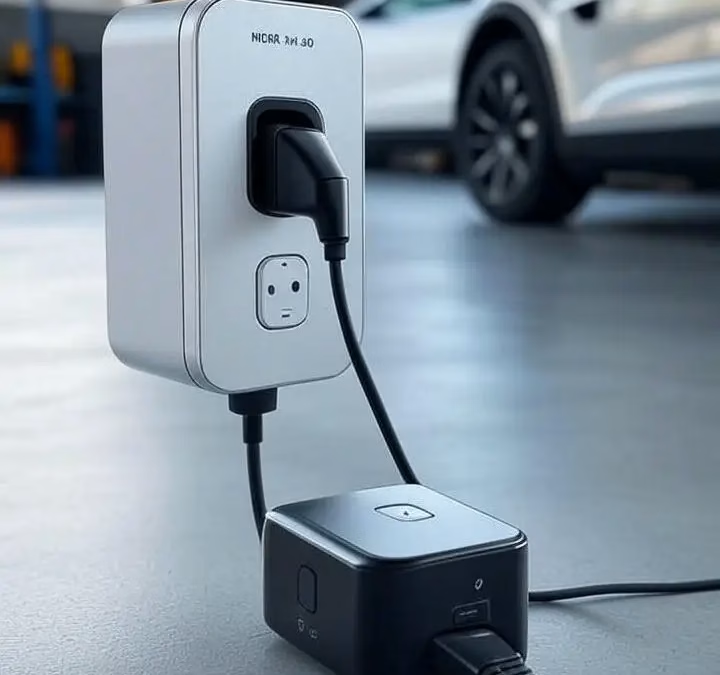
An EV receptacle is essentially an electrical outlet designed to supply power to an EV charging system. It’s the wall-mounted socket that connects an EV charger to the home's electrical system or, in some cases, a portable charging cable. Think of it as the interface between your home’s electrical system and the charging equipment.
Key points about EV receptacles:
- Power Delivery: It provides the electrical current needed to charge your EV, typically at 240 volts for faster Level 2 charging.
- Types: Common examples include a nema 14 50 outlet or NEMA 6-50, which are used as a heavy duty outlet for plug-in Level 2 chargers.
- Installation: It generally requires a dedicated circuit installed by a licensed electrician, and the receptacle must be rated for the circuit and charging equipment used.
Specialized EV-rated receptacles are recommended instead of standard appliance outlets to help reduce overheating risk.
Key Features of an EV Receptacle (NEMA 14-50 Outlet):
- Purpose: Provides a connection point for delivering electricity to an EV charger or cable.
- Types: Common EV receptacle types include NEMA 14-50 (240V, 50A) and NEMA 6-50 (240V, 50A), though specific requirements depend on the charger or vehicle.
- Installation: Requires professional installation by an electrician to ensure it meets electrical codes and can handle high voltage and amperage safely.
- Use Case: Often used for Level 2 charging at home, where a portable EV charger is plugged into the receptacle.
EV receptacles are passive components—they don’t control or manage the charging process. They simply deliver raw electrical power to the device plugged into them.
What is a Level 2 Charger?
An EV charger, also known as Electric Vehicle Supply Equipment (EVSE), is the device that manages and delivers electrical power to the vehicle’s battery in a controlled and safe manner. It can either be a plug-in unit that uses an EV receptacle or one of the hardwired chargers that connects directly to the home's electrical panel on a dedicated circuit, without an outlet or plug. That setup also affects output: a hardwired EV charger can deliver up to 48 amps of power, while plug-in chargers are typically limited to 40 amps.
Key Features of an EV Charger:
- Purpose: Converts and regulates electricity from the power source (like an EV receptacle or direct wiring) to charge the EV’s battery.
- Types: Includes Level 1 chargers (120V, slower charging) and Level 2 chargers (240V, faster charging). Some advanced models support smart features like scheduling or remote monitoring.
- Safety: Equipped with safety mechanisms to prevent overcharging, overheating, or electrical faults.
- Use Case: Used in homes, workplaces, or public charging stations to charge EVs efficiently.
The EV charger communicates with the vehicle to ensure the right amount of power is delivered at the right time, optimizing charging speed and safety.
Key Differences Between EV Receptacle and EV Charger
| Feature | EV Receptacle | EV Charger |
|---|---|---|
| Function | Supplies raw electrical power. | Regulates and delivers power to the EV. |
| Component Type | Passive (outlet). | Active (manages charging process). |
| Installation | Requires electrician; outlet-based setup connected to wiring. | May plug into an outlet or use hardwired installation on a dedicated circuit. |
| maximum charging speed | Depends on the charger used; outlet-based setups are typically limited to 40 amps. | Hardwired units can deliver up to 48 amps. |
| Full-charge time | With a plug-in charger, a full charge is roughly 6-8 hours. | With a hardwired charger, a full charge is roughly 4-6 hours. |
| Charging Control | No control over charging process. | Controls voltage, amperage, and safety. |
| Flexibility | Allows swapping chargers or cables. | Fixed or portable, depending on model. |
Why Do Installation Costs Matter?
Understanding the difference between an EV receptacle and an EV charger is crucial when setting up a home charging station or troubleshooting charging issues. For example:
- If you’re installing a charging setup at home, a plug-in setup often makes the most sense if you already have a compatible 240-volt outlet installed, often in a garage, so you can simply plug in the charger. If you need a new outlet, installation cost for a plug-in setup can range from $0 to $1,800 depending on outlet availability and distance from the electrical panel.
- Knowing the receptacle type ensures compatibility with your charger or EV’s charging cable.
- Budget-conscious EV owners may find a plug-in setup cheaper if the outlet is already there, while a hardwired installation is usually more permanent and typically costs about $800 to $3,000.
Hardwired chargers are usually the better fit for drivers who want the fastest possible charging speeds—often around 4-6 hours for a full charge—especially if they drive long distances daily or have a large battery.
Conclusion
In summary, an EV receptacle is the outlet connection that supplies power, while a hardwired EV charger becomes part of the home’s electrical system as one of the more permanent installations. Both are essential components of an EV charging setup, but they serve distinct roles. By understanding their differences, you can make informed decisions about your EV charging needs, whether you’re setting up a home station or planning for life on the road.
Plug-in chargers suit people who want flexibility, future proofing, or an easy upgrade, while hardwired chargers suit homeowners who prefer a professional appearance and no visible outlet; many homeowners choose based on whether they want a movable setup or one of the permanent installations.
Ready to charge your EV? Make sure you’ve got the right receptacle and charger combo for a seamless experience!
